It's been a great week! I got started with taking green roof data and talking to tours. I go out at 8:45, 12:30, and 4:30 to take soil moisture and temperature readings. While I'm collecting data, I talk to the tours that come by every 45 minutes. This is the first green roof experiment in the Southwest so I stress the importance of this research and the benefits of green roofs in the Southwest. I tend to talk to them for about 5 minutes and then leave time for questions. Many tourists have stayed to take a look at the plants and help me take soil moisture and temperature readings. It's been a lot of fun talking to them..it's a little nerve-racking when the tour guide hands me a microphone, but I get over it and have been doing pretty well.
Tools-Pen, Clipboard, Cellphone (to record time), Hydrosense soil moisture-reading device, and four digital thermometers
New, promising growth on a Red Yucca
The green roofs were constructed in October and will be used for this experiment for the next two years. There are three plant species being tested for compatibility: Dyssodia pentachaeta (Dogwood) Calliandra eriophylla (Fairy Duster), and Hesperaloe parviflora (Red Yucca). We have 36 of these extensive (6-8 inches of media) green roofs along with three roofs with traditional shingles and three roofs with white, reflective paint based with titanium. When you touch the roofs with the traditional shingles and compare it to the ones with the white paint, you can feel a huge temperature difference-the white-painted roofs are much cooler. While the white paint keeps the heat gain down, the paint is believed to be toxic, and as rainfall runs off roofs, the rain can accumulate paint residues and carry toxins off the roofs and into the environment. Inside each of the small houses, we have temperature-reading sensors that send data to a computer, and with that data, we can compare the temperatures of the three different types of roofs and can tell if the extensive green roofs are actually leading to decreased temperatures inside buildings-the most important benefit for the SW region.
On Monday, I was getting used to taking the data, and it took me almost four hours to collect all the data on a single visit! I ended up getting my hands on three more thermometers so I can set them in place and collect data a lot quicker. Now, I have it down to about 1.25 hours to collect all the numbers on a single visit (and I visit them 3x a day). I have to visit the 36 roofs and take temp and soil moisture readings at four different spots...so that's 36x4x2 data points. Since I go out at three different times of the day, I get lots of sun exposure. I go out with a long-sleeved undershirt, sunglasses, and a wide-brimmed hat and I apply sunscreen at three different times throughout the day. So far, I haven't had any sunburns, but my legs are starting to tan. The weather has been hot, but on some days, it can be really windy. On Tuesday, we had our first show of clouds since I've been here.
We've had really beautiful views of the full moon
And saw a Gila Monster crawl by our casita
Today, instead of taking soil moisture and temp readings, I went to campus to help Sarah, one of Dr. P's lab technicians. She went to Columbia University for her undergrad and is now heading to UC, Monterrey to study the vascular system of kelp (marine biology). I helped her with some nitrogen extractions. Basically, investigators find locations of "washes", dried riverbeds in the city, and flush small areas of them with water. With the sudden influx of water, the soil microbes are quick to respond. So, Dr. P is interested in how the microbes respond to the influx of water with respect to nitrogen cycling. With the increase in water, then do the microbes take up more nitrogen? In order to answer this question, the investigators add a tracer, isotropic nitrogen (N15), and then will analyze if/how the microbes are using the nitrogen by looking for the tracer while extracting nitrogen. The soil samples are put in Erlenmeyer flasks and placed in an air-tight containers. In the middle of the container, a flask of chloroform is placed. The container is then vacuumed, and the chloroform starts to evaporate and bubble a bit. When the soil microbes are exposed to chloroform, their cells burst, essentially making their carbon and nitrogen available for lab analysis, specifically nitrogen extractions. This whole process is called fumigation.
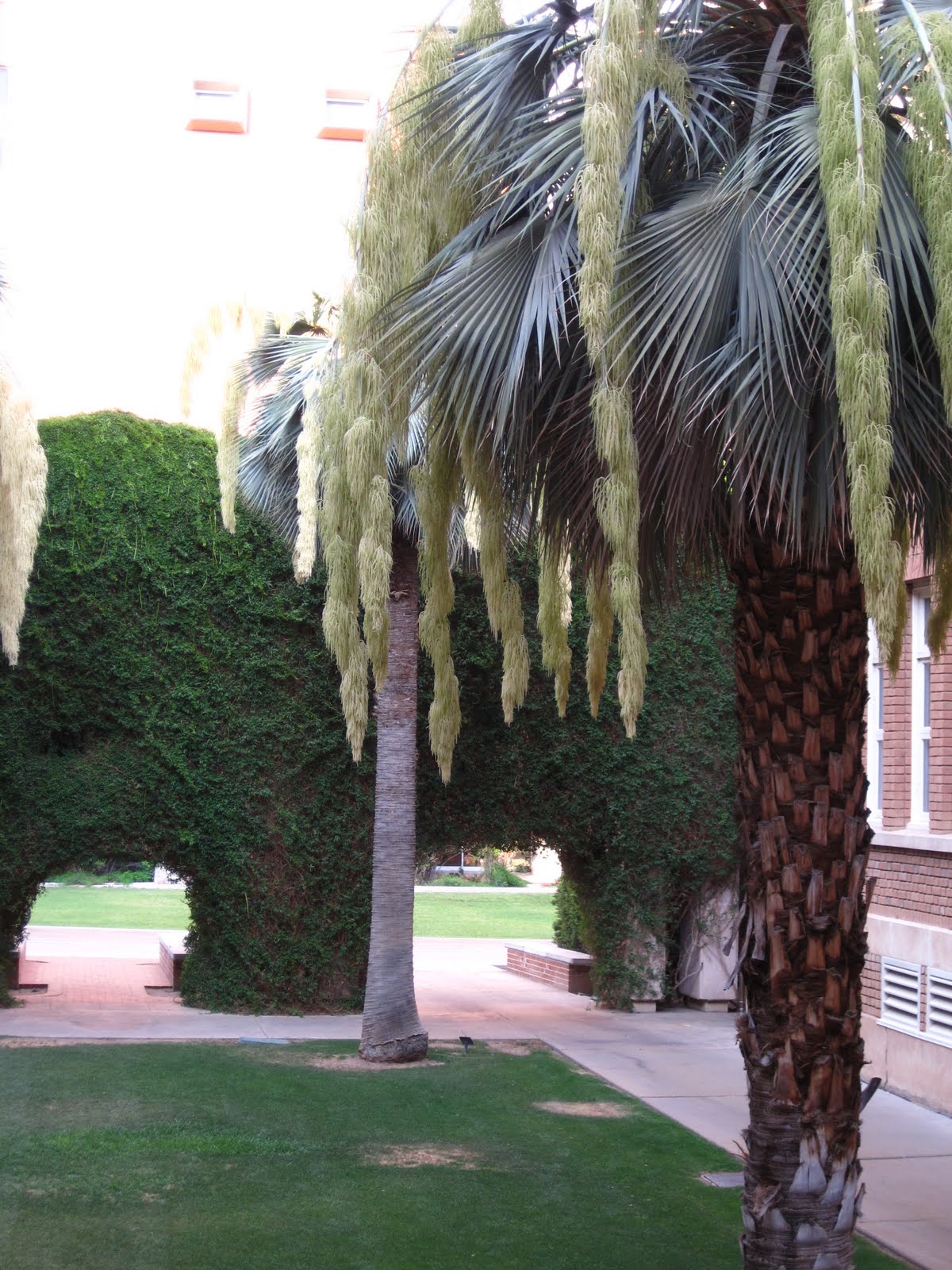
Nice part of campus
Since Sarah is a lab tech, she is left with a lot of sample processing. She receives the samples, prepares and weighs them, adds chemicals, fumigates then, puts them in a shaker, strains them, and then stores the extracted nitrogen in sample cups.They are then frozen until they are sent to a lab for chemical analysis where we will found out the exact concentration of nitrogen.
Today, my job was to help Sarah with all the steps. I weighed samples, cleaned glassware, prepared funnels, and strained the samples. This is typical lab work. It can be tedious at times, but it's very simple and very repetitive. From my experiences in Silvia's and John's lab and now this lab, I don't think my passion lies in lab work, and I don't know if it's ideal work environment. If I'm going to be working with chemicals and stuck in a lab, I might as well be working towards the next life-saving drug. Soil ecology is important too, I guess, but the work is very repetitive, and I don't see myself getting a lot out of it. Who knows? I might start to like lab work once I start my own project and move away from solely assisting others with their projects. Also, I didn't ask what the whole purpose this experiment was, and if I knew what it was, I probably would have thought I was doing something of some importance. We'll see, but that's what this internship and experiences are all about, figuring out what you like and things you just can't stand. On Monday, I'm meeting with some faculty of the landscape architecture department to tour their department and talk to them about my interests. Dr. P introduced me to Dr. Livingston who is a member of the landscape architecture (LA) department. She has her Masters in LA and a Ph.D in natural resources conservation. She seems to be interested in water conservation through landscape design and the use of native plants in landscapes. She'll be great to talk to since her background is similar to something I think that I'd like to pursue.
I'm going to continue taking readings from the green roofs on an every-other day basis, and next week on Wednesday, Dr. P and I are going to sit down and come up with a plan for my project. I'll be using the existing green roofs and probably start taking a new data set from them. So maybe, I'll measure plant growth or soil respiration. I have some journal articles to go through, and those may give me some ideas. I met with Dr. P for a short time today, and he showed me a pamphlet on the 2012 Sustainable Water Management Conference. He suggested that I submit an abstract of my project to present at this conference. Hopefully, I'll have an idea of my project's purpose and question by this time next week so I can start writing up an abstract. This conference is from March 18th-21st in Portland Oregon. So, I'm hoping to go to San Fran from Dec 5-9 for the American Geophysical Union conference and now this one! That's one great thing about research is the funding and travel to conferences!
But all in all, I'm having a great time. The people are really nice and I'm really getting to know the other interns. Most of them are undecided like me and really want to find out their ideal field/type of work. It's nice to know that others are working to discover that as well and it's not just me over-thinking my future.
Hey Padre, you we're right, I'm just hugging trees this summer J/K
Friday, June 17, 2011
Sunday, June 12, 2011
Week One-Orientation and GRE prep course
Hey Guys!
We've been really busy this first week and today (Sunday) is my first day off.
On Monday, we met with Dr. Pavao-Zuckerman (my mentor and program director), the other mentors, and Biosphere staff, went over the summer schedule, and talked about conferences. They are providing funding for travel to one conference and encourage that we look for funding to present at other conferences as well. I won't have to think about applying to present at a conference until the end of the summer, but it's exciting to imagine I'll have the chance to present about green roof research. The American Geophysical Union (AGU) hosts the largest worldwide conference in geophysical research, and this year it is from Dec 5-9th in San Francisco. Good excuse to skip out on some school days to travel! Since my research will be focusing on the soil dynamics of green roofs, my research is relevant and hopefully my research abstract will be accepted.
We were treated to lunch and another (my third) tour of the Biosphere. Since we were led by program directors, we were able to explore deeper into the Biosphere. This time, I was able to walk through the rainforest and the sandy beach and explore the basement of the Biosphere 2. My friends tagged me in some pictures, and you can see us in the rainforest!
The Fog Desert-resembles a desert that lies by a coastline. This one is similar to one found in Baja California. The real desert outside is the Sonoran Desert and is the hottest desert in North America!
The tunnel to the "lung" that I described in the first blog. Air that has expanded due to rising temperatures flows through this tunnel and reaches the lung where it pushes the rubber roof up. At night, the air leaves the lung and fills the Biosphere 2.
Inside the lung-here you can see the flexible rubber roof that moves as air expands and cools. The white beams will touch the ground when the rubber roof starts to fall with the compression of air at night. Pretty cool..they don't use it now because B2 is an open system, but when the "Biospherians" lived here the system was completely closed, and the two lungs were vital to keep the air pressure constant.
Tuesday was a really easygoing day and we had the day off to get dressed in our new Biosphere 2 uniforms and take pictures. After that we made our way to the grocery store and supply shopping.
Up at 6 am! Here comes Wednesday, the first day of the GRE prep course. We took the one-hour drive from the Biosphere 2 to the University of Arizona and arrived early for our 8 am course. Immediately, we took a practice test which lasted over and hour and then talked about the general setup of the test and what test day would be like. We ended up finishing early at 11:30am and stayed on campus for lunch with Dr. Pavao-Zuckerman (Dr. P) and toured the U of A campus. After the tour, the group split up, and I had some time to talk with Dr. P about project ideas. The desert changes dramatically after the monsoons come (around early July), and we talked about measuring the response of the green roof plants, microbes, and soils to the increase in rainfall. Since the rainfall contains a different chemical composition than does regular well/irrigation water, the rainfall may cause different changes in the plants than would an artificial increase in irrigation. We would measure microbial respiration (how the microbes are taking up and releasing carbon dioxide) and by taking pictures with a special camera, would will measure changes in plant growth and color (measuring color changes by taking pictures in infrared).
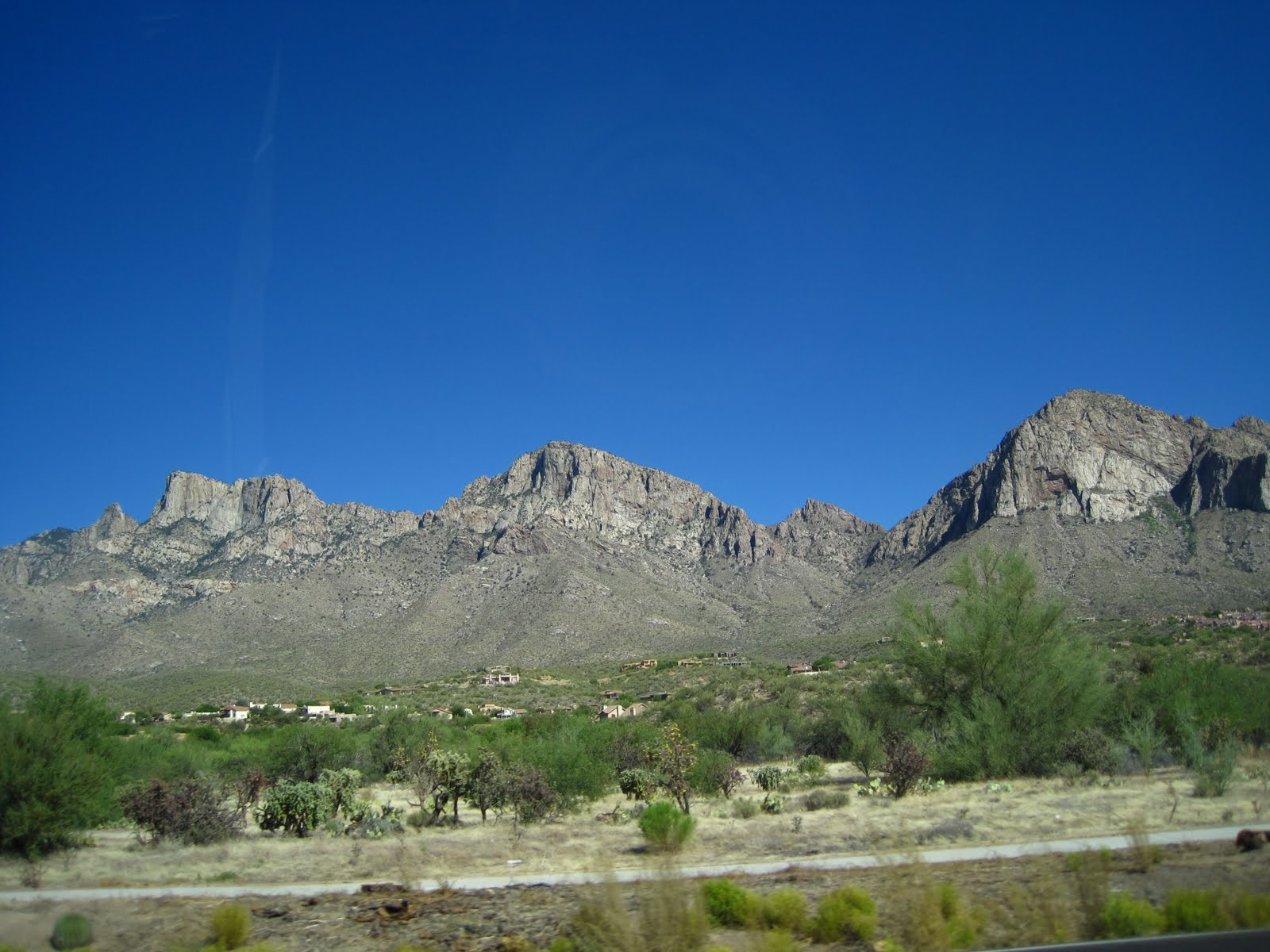
Daily commute for the week-not bad, huh? Beautiful scenery with the mountains!
University of Arizona campus
Old Main
Peaceful, small plaza right near the university
Later that evening on Wednesday, we checked out the local Tuscon Ultimate Frisbee league. One of the girls, Pin, plays for her school and was hoping to play for a league this summer. She researched leagues and found a local team. I watched for a bit and then was ready to get playing. It's a pretty intense group..they have specific offensive strategies like vertical and horizontal "stacking"which I don't understand exactly so next time I play I'll have to try to explain it. All the 40+ league members will very welcoming and understanding of all skill levels so I felt comfortable playing. I caught all the frisbees that were thrown to me while in the game, but I had a hard time passing will such an intense defense all over me.We stayed until 9:30 and then made it back to the Biosphere 2 at 11. Such a long day but a great one!
After a late night Wednesday, we woke again early for the second day of prep class. The teacher, Michael Flynn, is great. He used to work for ETS, the company that produces the GRE and has worked on admissions committees so he knows how the test is put together, what to focus on, what resources are useful, and how to study. On Thursday, we focused on the verbal which is pretty much a vocab test. He showed us some tactics to use when we are really stuck on a verbal problem, which is usually an analogy. The test will compare two words and you have to figure out the relationship between the two words and find another analogy from the 5 answer choices that shares the same relationship. The hard part is that they use words that you never hear of so its hard to figure out the original relationship, but he gave us a list of root words to focus on and tactics that help identify the polarity of words-whether it is a positive or negative word. Another big thing-the first 15-20 questions on the GRE are the most important. If you do well on those, you get into the 700-800 club and then the next ten fine-tune your score and decide whether your score is a 730 or 750. So I learned to take my time! I usually rush to finish, but with this test, it's much better to get the first questions correct then complete the entire test. Of course, you want to finish the entire thing, but if you need the time in the beginning, take it!
On Friday, we focused on the math section which happens to be much easier than SAT math. After class, we hung out on campus until the pool party started at 5:30 pm. Dr. P, program directors, and members of the other 10 internships were there. We snacked on catered food and desserts and then laid by the pool for the rest of the evening. I've met some of the other interns that belong to other programs, and most of them are from Latin American countries. We talk in Spanish for most of the time as I struggle to understand, and then we switch to English when they want to practice. I've met people from Mexico and Columbia.
Yesterday, we attended class from 8-3pm, got some ice cream, went to a Harry and the Potters concert (yes, they played wizard rock all about Harry Potter), and then had some Mexican.
Have to go pick up the last intern from the airport!
Love you guys,
Sara
We've been really busy this first week and today (Sunday) is my first day off.
On Monday, we met with Dr. Pavao-Zuckerman (my mentor and program director), the other mentors, and Biosphere staff, went over the summer schedule, and talked about conferences. They are providing funding for travel to one conference and encourage that we look for funding to present at other conferences as well. I won't have to think about applying to present at a conference until the end of the summer, but it's exciting to imagine I'll have the chance to present about green roof research. The American Geophysical Union (AGU) hosts the largest worldwide conference in geophysical research, and this year it is from Dec 5-9th in San Francisco. Good excuse to skip out on some school days to travel! Since my research will be focusing on the soil dynamics of green roofs, my research is relevant and hopefully my research abstract will be accepted.
We were treated to lunch and another (my third) tour of the Biosphere. Since we were led by program directors, we were able to explore deeper into the Biosphere. This time, I was able to walk through the rainforest and the sandy beach and explore the basement of the Biosphere 2. My friends tagged me in some pictures, and you can see us in the rainforest!
The Ocean-Unfortunately, we have a bit of an algae problem-we may be able to get permission to swim in it if we clean out the algae!
The Fog Desert-resembles a desert that lies by a coastline. This one is similar to one found in Baja California. The real desert outside is the Sonoran Desert and is the hottest desert in North America!
The tunnel to the "lung" that I described in the first blog. Air that has expanded due to rising temperatures flows through this tunnel and reaches the lung where it pushes the rubber roof up. At night, the air leaves the lung and fills the Biosphere 2.
Inside the lung-here you can see the flexible rubber roof that moves as air expands and cools. The white beams will touch the ground when the rubber roof starts to fall with the compression of air at night. Pretty cool..they don't use it now because B2 is an open system, but when the "Biospherians" lived here the system was completely closed, and the two lungs were vital to keep the air pressure constant.
Tuesday was a really easygoing day and we had the day off to get dressed in our new Biosphere 2 uniforms and take pictures. After that we made our way to the grocery store and supply shopping.
Up at 6 am! Here comes Wednesday, the first day of the GRE prep course. We took the one-hour drive from the Biosphere 2 to the University of Arizona and arrived early for our 8 am course. Immediately, we took a practice test which lasted over and hour and then talked about the general setup of the test and what test day would be like. We ended up finishing early at 11:30am and stayed on campus for lunch with Dr. Pavao-Zuckerman (Dr. P) and toured the U of A campus. After the tour, the group split up, and I had some time to talk with Dr. P about project ideas. The desert changes dramatically after the monsoons come (around early July), and we talked about measuring the response of the green roof plants, microbes, and soils to the increase in rainfall. Since the rainfall contains a different chemical composition than does regular well/irrigation water, the rainfall may cause different changes in the plants than would an artificial increase in irrigation. We would measure microbial respiration (how the microbes are taking up and releasing carbon dioxide) and by taking pictures with a special camera, would will measure changes in plant growth and color (measuring color changes by taking pictures in infrared).
Daily commute for the week-not bad, huh? Beautiful scenery with the mountains!
University of Arizona campus
Old Main
Peaceful, small plaza right near the university
Later that evening on Wednesday, we checked out the local Tuscon Ultimate Frisbee league. One of the girls, Pin, plays for her school and was hoping to play for a league this summer. She researched leagues and found a local team. I watched for a bit and then was ready to get playing. It's a pretty intense group..they have specific offensive strategies like vertical and horizontal "stacking"which I don't understand exactly so next time I play I'll have to try to explain it. All the 40+ league members will very welcoming and understanding of all skill levels so I felt comfortable playing. I caught all the frisbees that were thrown to me while in the game, but I had a hard time passing will such an intense defense all over me.We stayed until 9:30 and then made it back to the Biosphere 2 at 11. Such a long day but a great one!
After a late night Wednesday, we woke again early for the second day of prep class. The teacher, Michael Flynn, is great. He used to work for ETS, the company that produces the GRE and has worked on admissions committees so he knows how the test is put together, what to focus on, what resources are useful, and how to study. On Thursday, we focused on the verbal which is pretty much a vocab test. He showed us some tactics to use when we are really stuck on a verbal problem, which is usually an analogy. The test will compare two words and you have to figure out the relationship between the two words and find another analogy from the 5 answer choices that shares the same relationship. The hard part is that they use words that you never hear of so its hard to figure out the original relationship, but he gave us a list of root words to focus on and tactics that help identify the polarity of words-whether it is a positive or negative word. Another big thing-the first 15-20 questions on the GRE are the most important. If you do well on those, you get into the 700-800 club and then the next ten fine-tune your score and decide whether your score is a 730 or 750. So I learned to take my time! I usually rush to finish, but with this test, it's much better to get the first questions correct then complete the entire test. Of course, you want to finish the entire thing, but if you need the time in the beginning, take it!
On Friday, we focused on the math section which happens to be much easier than SAT math. After class, we hung out on campus until the pool party started at 5:30 pm. Dr. P, program directors, and members of the other 10 internships were there. We snacked on catered food and desserts and then laid by the pool for the rest of the evening. I've met some of the other interns that belong to other programs, and most of them are from Latin American countries. We talk in Spanish for most of the time as I struggle to understand, and then we switch to English when they want to practice. I've met people from Mexico and Columbia.
Yesterday, we attended class from 8-3pm, got some ice cream, went to a Harry and the Potters concert (yes, they played wizard rock all about Harry Potter), and then had some Mexican.
Have to go pick up the last intern from the airport!
Love you guys,
Sara
Sunday, June 5, 2011
End of the first weekend at Biosphere 2
Hey Guys!
Saturday was a nice easy going day. I woke naturally at 6:30 from the rising sun but rolled around until 8am. I spend most of the morning reading and on the computer and started to explore around 4pm. I walked down the quiet road to what looked like a deserted group of houses and then decided to turn back. I saw some deer, a horse, some California quail, and rabbits. I tried to jog a bit but it was still too hot around 5. I had a nice, long conversation with mom and enjoyed the grassy area and the background of the desert and the Catalina Mountains. With this time alone, I did some stretches, push-ups, and sit-ups on the grassy area-my first "exercise" in a while. During the whole day, the compound was silent and lonely until two of the other interns showed up.
Yesterday evening, the first two other interns arrived. Yay! Finally some company! Megan is from Kentucky and studying in Minnesota and Pin is from Thailand and studying in Boston. Later on at night, Fiona joined us after flying from NY. So far, everyone is really getting along, and everyone is really nice and personable. We all kind of eat the same things and act similarly. I'm excited to get to know them and have some fun times together!
This morning we were walking along and ran into Noah, the first of the 3 guys to arrive. Together we all toured the Biosphere and then came back for lunch. Not much else to do today besides some reading and maybe some more walking/hiking. I've been looking for hiking trails but haven't been able to find any. I've walked through the desert, but the cactus are everywhere and it's difficult to make your way through.
Tomorrow morning at 9:30 we'll meet our professors and for a tour-just seems like an introductory day. On Tuesday-Friday, we'll be taking the GRE prep course in the morning. I'm not sure if that continues through next week or not. The course will be a good review and help me get started with how/what to study. Hopefully, I'll score well on the test this summer and never have to think of it again! It'll be up to me to study while I'm here, but the other interns will be seniors as well next year and may encourage me to study more :)
Views of the campus
Flora
Fauna
Mountain Views
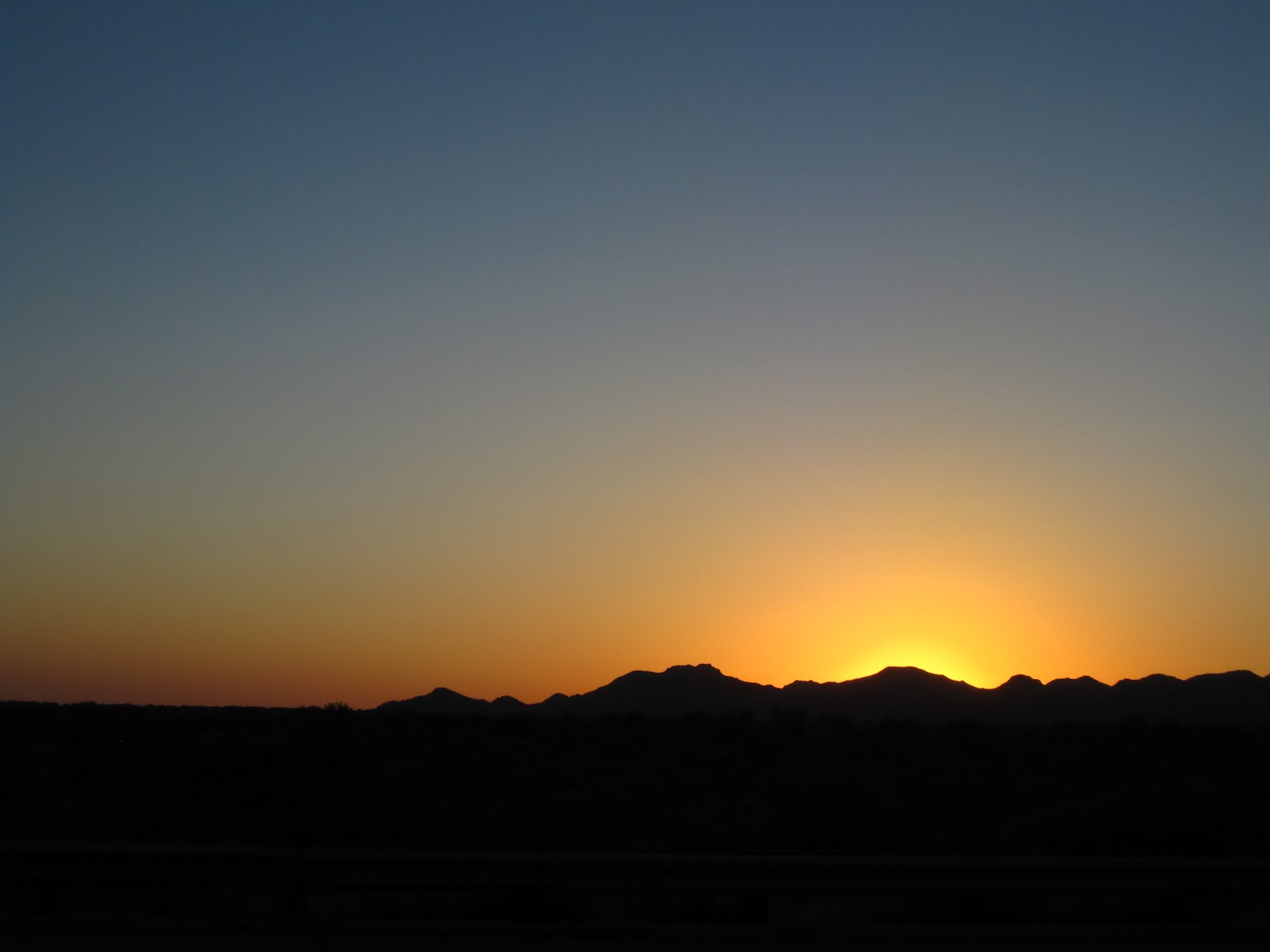
Evening Views
Saturday was a nice easy going day. I woke naturally at 6:30 from the rising sun but rolled around until 8am. I spend most of the morning reading and on the computer and started to explore around 4pm. I walked down the quiet road to what looked like a deserted group of houses and then decided to turn back. I saw some deer, a horse, some California quail, and rabbits. I tried to jog a bit but it was still too hot around 5. I had a nice, long conversation with mom and enjoyed the grassy area and the background of the desert and the Catalina Mountains. With this time alone, I did some stretches, push-ups, and sit-ups on the grassy area-my first "exercise" in a while. During the whole day, the compound was silent and lonely until two of the other interns showed up.
Yesterday evening, the first two other interns arrived. Yay! Finally some company! Megan is from Kentucky and studying in Minnesota and Pin is from Thailand and studying in Boston. Later on at night, Fiona joined us after flying from NY. So far, everyone is really getting along, and everyone is really nice and personable. We all kind of eat the same things and act similarly. I'm excited to get to know them and have some fun times together!
This morning we were walking along and ran into Noah, the first of the 3 guys to arrive. Together we all toured the Biosphere and then came back for lunch. Not much else to do today besides some reading and maybe some more walking/hiking. I've been looking for hiking trails but haven't been able to find any. I've walked through the desert, but the cactus are everywhere and it's difficult to make your way through.
Tomorrow morning at 9:30 we'll meet our professors and for a tour-just seems like an introductory day. On Tuesday-Friday, we'll be taking the GRE prep course in the morning. I'm not sure if that continues through next week or not. The course will be a good review and help me get started with how/what to study. Hopefully, I'll score well on the test this summer and never have to think of it again! It'll be up to me to study while I'm here, but the other interns will be seniors as well next year and may encourage me to study more :)
Views of the campus
Flora
Fauna
Mountain Views
Evening Views
Subscribe to:
Posts (Atom)